When you're starting a business, doing your own bookkeeping feels like the obvious choice. It saves money, you stay close to your numbers, and software like QuickBooks or Wave makes it seem straightforward. But as your business grows, the hidden costs of DIY bookkeeping start to add up - in ways that aren't always obvious until tax season hits.
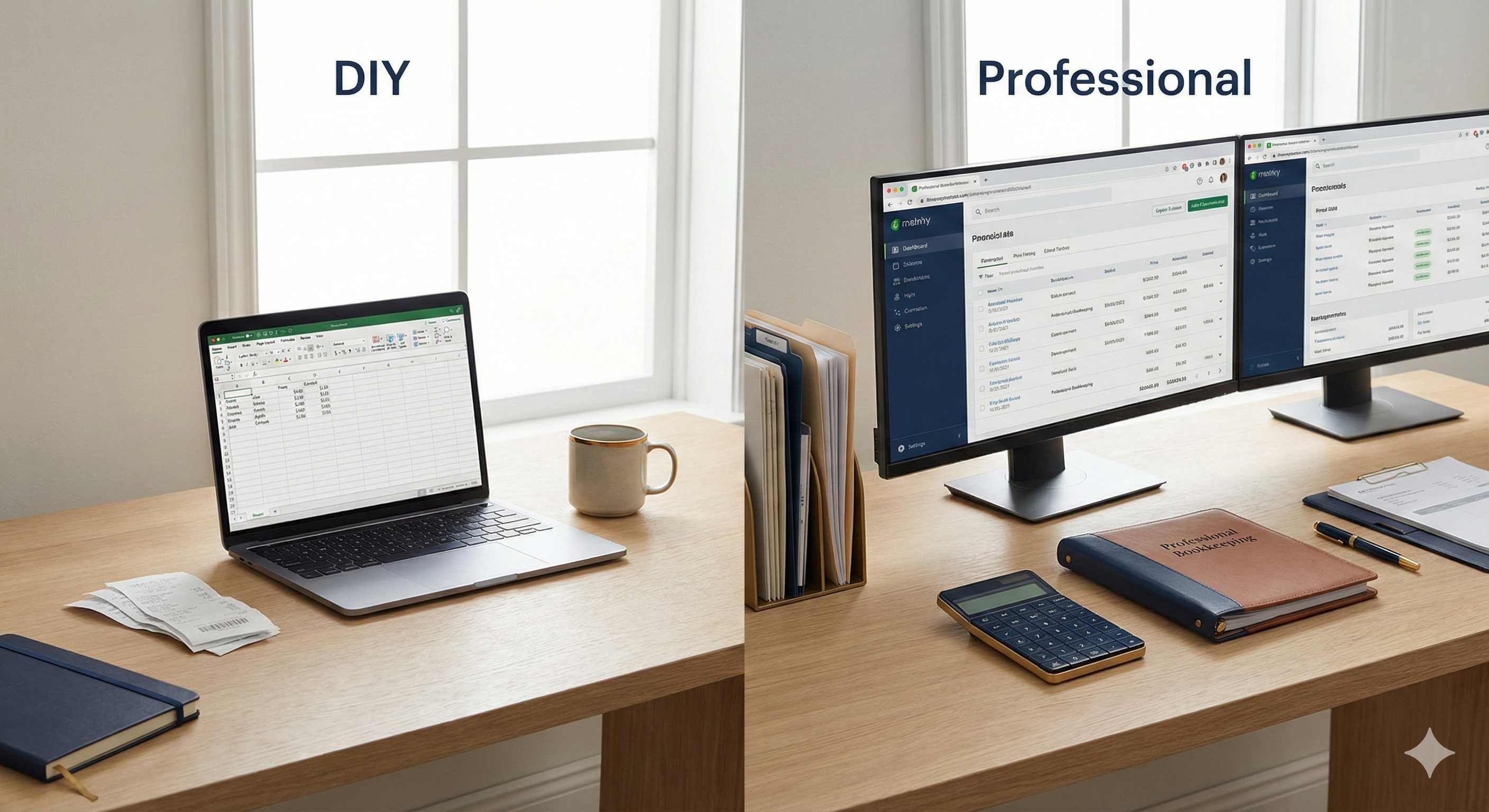
When DIY Bookkeeping Works
Let's be honest: not every business needs a professional bookkeeper from day one. If your situation matches most of the criteria below, doing it yourself is a reasonable starting point:
- You have fewer than 50 transactions per month
- You have one bank account and one credit card for business
- Your income comes from 1-2 sources
- You're comfortable with basic accounting software
- You have the time to stay consistent (at least 2-3 hours per week)
Even in these cases, you should still have a professional review your books at least once a year before tax filing. Think of it like a financial check-up.
The Real Cost of DIY Mistakes
Software makes bookkeeping feel easy. But the most common (and expensive) mistakes happen not because the software failed, but because the person using it didn't know the rules:

- Miscategorized transactions: Putting a business meal under "office supplies" seems small, but thousands of wrong categories add up to inaccurate financial statements and missed deductions
- Missed reconciliations: If you're not reconciling your bank account monthly, you could be missing transactions, duplicate entries, or fraud
- Incorrect sales tax handling: Collecting and remitting sales tax incorrectly can result in penalties and audits
- Personal and business expenses mixed: This is the number one bookkeeping problem we see with new clients. It creates a nightmare at tax time and weakens your legal liability protection
- Unrecorded cash transactions: If you accept cash payments and don't record them, you're underreporting income
The average small business owner spends 5-10 hours per month on bookkeeping tasks. At a conservative value of $50/hour for your time, that's $250-$500/month in opportunity cost - often more than what professional bookkeeping would cost.
Side-by-Side Comparison
| Factor | DIY | Professional |
|---|---|---|
| Monthly Cost | $0-30 (software) | $150-500+ |
| Your Time | 5-10 hours/month | ~30 min/month |
| Accuracy | Variable | High |
| Tax Readiness | Often needs cleanup | Always ready |
| Financial Insights | Limited | Monthly reports & trends |
| Scalability | Breaks down with growth | Scales with your business |
| Audit Risk | Higher (more errors) | Lower (clean books) |
Signs It's Time to Hire a Professional
There's no single magic number, but here are the signals we see most often when a business has outgrown DIY bookkeeping:

- You're behind on your books - If you haven't categorized transactions in months, you've lost visibility into your business
- Tax season is stressful - If preparing for taxes feels like a scramble, your books aren't being maintained properly
- You have employees or contractors - Payroll adds significant complexity
- Revenue exceeds $75-100K - At this point, the cost of errors likely exceeds the cost of hiring help
- You're making financial decisions without clear data - If you don't know your true profit margin, cash flow position, or top expenses, you're flying blind
- You have multiple revenue streams - Multiple income sources mean more categorization, more complexity, more room for error
The best time to hire a professional bookkeeper is before you need one. Cleaning up a year of messy books costs significantly more than maintaining them properly from the start.
What a Professional Bookkeeper Actually Does
A lot of people think a bookkeeper just "enters data." In reality, a good bookkeeper provides:
- Monthly transaction categorization and bank reconciliation
- Profit and loss statements and balance sheets
- Cash flow monitoring and alerts
- Vendor and contractor payment tracking (1099 prep)
- Year-end tax package preparation for your CPA
- Expense trend analysis so you can see where your money is actually going
The TFMA Approach
At TFMA, we don't just keep your books clean - we help you understand them. Every month, our clients get clear, jargon-free reports that show exactly how their business is performing. We flag unusual expenses, track trends, and make sure you're always ready for tax season.
If you're currently doing your own bookkeeping and wondering whether it's time to bring in help, we offer a free consultation to review your current setup and give you an honest assessment. Sometimes we tell people they're doing fine on their own. More often, we find opportunities to save them time, money, and stress.